Should I Rent a Car or Buy One for Daily Commuting in India?
Before comparing renting vs. buying, it’s important to understand the practical challenges of daily commuting across metropolitan Indian cities:
1. Heavy Traffic
Cities like Mumbai, Bengaluru, and Delhi are famous for bumper-to-bumper traffic. The average commuter spends 1.5 to 3 hours daily on the road.
2. Unpredictable Parking
Finding safe parking space is expensive and inconvenient, especially in corporate hubs such as BKC, Worli, Cyberhub, Hinjewadi, and Whitefield.
3. High Pollution Levels
Idling in traffic increases fuel consumption, pollution, and maintenance needs.
4. Daily Wear & Tear
Indian roads—potholes, speed bumps, narrow lanes—cause faster wear on tyres, suspension, and brakes.
5. Rising Costs
Fuel, maintenance, parking, and EMIs make owning a car a financial burden for many.
Given these challenges, renting a chauffeur-driven car is increasingly becoming a popular alternative.
Option 1: Renting a Chauffeur-Driven Car for Daily Use
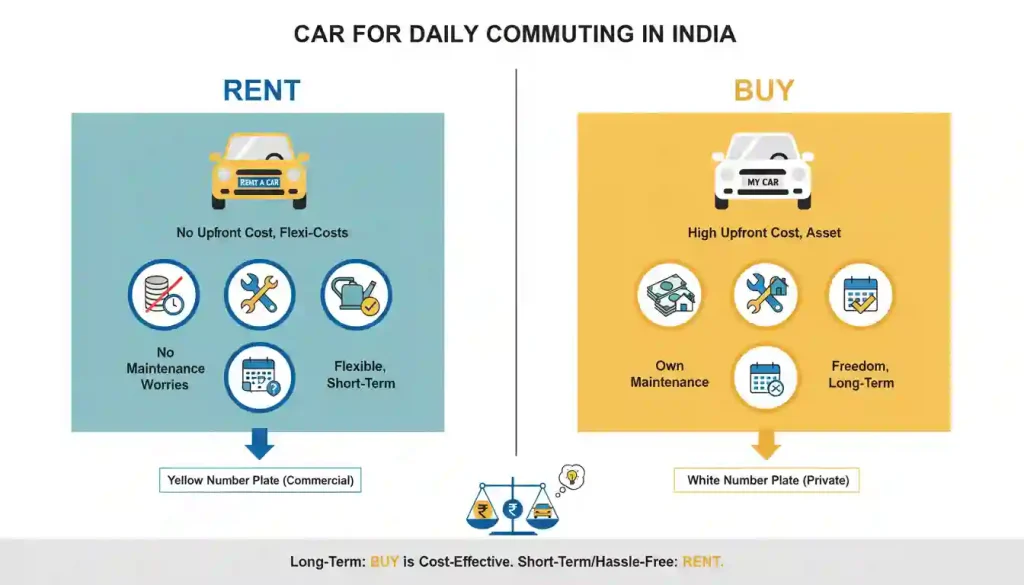
Renting a car with a driver gives you comfort, convenience, and efficiency—without the headaches of ownership.
Advantages of Renting a Car for Daily Commuting
1. No Maintenance Costs
You don’t pay for:
Servicing
Part replacements
Tyres
Battery
Engine oil changes
Unexpected repairs
For city travel, where wear & tear is high, this is a big advantage.
2. No Parking Hassles
Your chauffeur drops you at your destination and moves the car to a legal parking spot or waits nearby.
This saves:
Time
Money
Stress
Safety concerns
In cities like Mumbai, this convenience alone is worth thousands of rupees per month.
3. Predictable Monthly Cost
You can rent cars on:
Daily
Weekly
Monthly
Long-term (1–12 months) basis
For example, Sudarshan Cars offers monthly packages that include:
Fuel (optional add-on)
Chauffeur charges
Insurance
Vehicle maintenance
Replacements during breakdowns
Your cost becomes fixed, unlike car ownership where unexpected expenses pop up every few months.
4. Professional Chauffeurs
A trained chauffeur brings:
Safety
Defensive driving
Route optimisation
Professional behaviour
Punctuality
This is especially valuable for corporate travellers, senior executives, or business owners.
5. Suitable for Heavy Traffic
Instead of driving in traffic for hours, you can use your commute time to:
Work
Attend calls
Relax
Read
Reply to emails
Save energy for meetings
This changes your entire productivity level.
6. Access to a Better Car Than You Can Afford to Buy
You may not want to spend ₹25–35 lakh on a premium car, but you can rent:
Hyundai Alcazar
Sedans
Electric vehicles
Renting lets you use a high-end vehicle without paying a huge upfront cost.
7. Ideal for Temporary Needs
Useful if you:
Relocated to a new city
Have a short-term work assignment
Want a reliable vehicle for 3–12 months
Don’t want EMI commitments
Renting is flexible. Buying is permanent.
Disadvantages of Renting a Car
1. Long-Term Cost Can Be Higher
Over many years, renting may cost more than buying—especially if the car is used for 3–5 hours, not full day.
2. Limited Personalisation
You cannot customise or modify the vehicle.
3. Booking Availability
During festivals, corporate events, or peak season, car availability may be limited.
Services like Sudarshan Cars solve this with pre-booked long-term rental plans.
Option 2: Buying a Car for Daily Use in India
Buying a car is still the preferred choice for families and individuals who want full ownership and flexibility.
Advantages of Buying a Car for Daily Commuting
1. One-Time Investment for Long-Term Use
Once the EMI ends, the car becomes a long-term asset.
2. Personalised Convenience
You can:
Play your music
Adjust seat settings
Keep your own belongings inside
Use it anytime for personal trips
Ownership gives full freedom.
3. Lower Cost Over 6–10 Years
Over many years, buying may be cheaper if you take care of the car yourself.
4. Better for Short Commutes
If your commute is just 5–8 km a day, car wear & tear stays low.
Disadvantages of Buying a Car for Daily Use in India
1. High Upfront Cost
Buying even a mid-size car requires:
₹20–50 lakh for premium cars
₹8–15 lakh for basic cars
Plus road tax, insurance, accessories, etc.
2. High Monthly Expenses
Owning a car includes:
EMI
Fuel
Parking
Maintenance
Repairs
Tyres
Insurance
In cities like Mumbai/Delhi, parking alone can cost ₹3,000–₹10,000 per month.
3. Depreciation
A car loses 35%–50% of its value in 3–5 years.
4. Stress of Driving
Navigating rush-hour traffic daily becomes mentally exhausting.
5. Wear and Tear
Daily city driving causes:
Suspension damage
Brake pad wear
Tyre aging
Clutch issues (especially in Bengaluru traffic)
These repairs cost thousands of rupees each year.
Cost Comparison: Renting vs Buying for Daily Commuting
Let’s compare the cost of using a mid-range car (like Kia Carens or Innova Hycross) in Mumbai.
If You Buy the Car
Car Cost: ₹25 lakh
EMI: ~₹35,000/month
Fuel: ~₹8,000–₹12,000/month
Parking: ₹2,000–₹10,000/month
Maintenance: ₹2,500–₹4,000/month
Insurance: ₹1,500–₹2,500/month
Driver Cost: ₹25,000–₹40,000/month
Total Monthly Cost: ₹80,000–₹1,05,000
This does not include sudden repairs.
If You Rent a Chauffeur-Driven Car
Sudarshan Cars offers monthly rentals for:
₹75,000–₹95,000/month (with chauffeur)
Packages vary by:
Car model
Hours per day
Fuel option
Add-ons
This includes:
Chauffeur
Breakdown support
Insurance
Replacement car
Total Monthly Cost: Fixed & predictable
For someone who works long hours and travels mainly between office, meetings, and home, renting is often more cost-efficient.
24×7 Helpline: 022-695-84100
Bookings: [email protected]